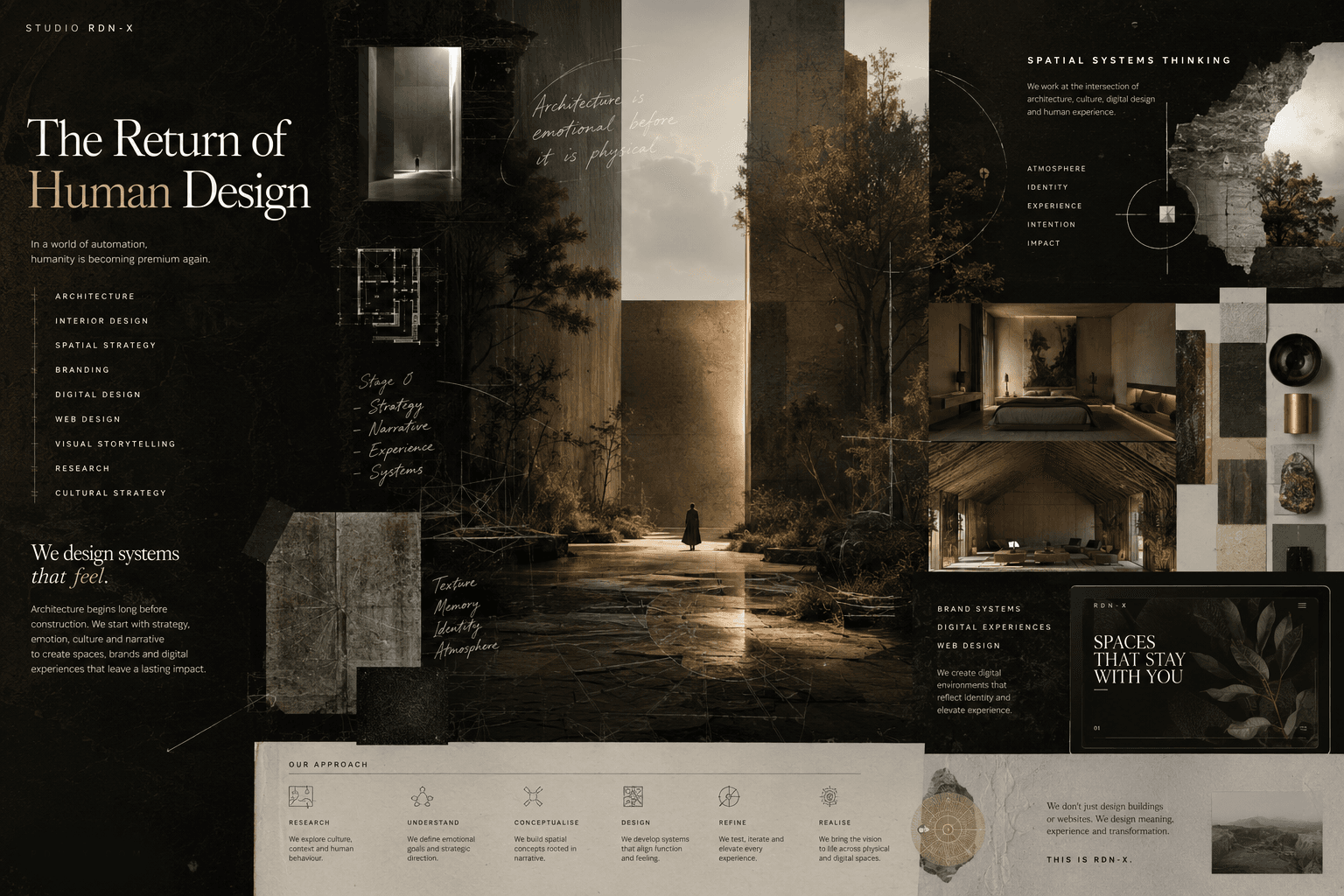
The Return of Human Design
In a world shaped by automation and algorithmic sameness, something unexpected is happening across architecture, branding, and digital culture. Humanity is becoming premium again.
In a world increasingly shaped by automation, templates, and algorithmic sameness, something unexpected is happening across architecture, branding, digital design, fashion, and visual culture.
Humanity is becoming premium again.
Over the last few weeks at Studio RDN-X, we've been studying emerging global visual and cultural shifts across design industries — from architecture and editorial systems to photography, web design, storytelling, spatial experience, and digital branding. One thing has become increasingly clear.
The future does not belong to the most polished work. It belongs to the most intentional work.
Not louder for the sake of noise. Not messy for the sake of aesthetics. But work that feels authored. Work with emotional gravity. Work with texture, personality, memory, atmosphere, and cultural presence.
And this shift changes everything.
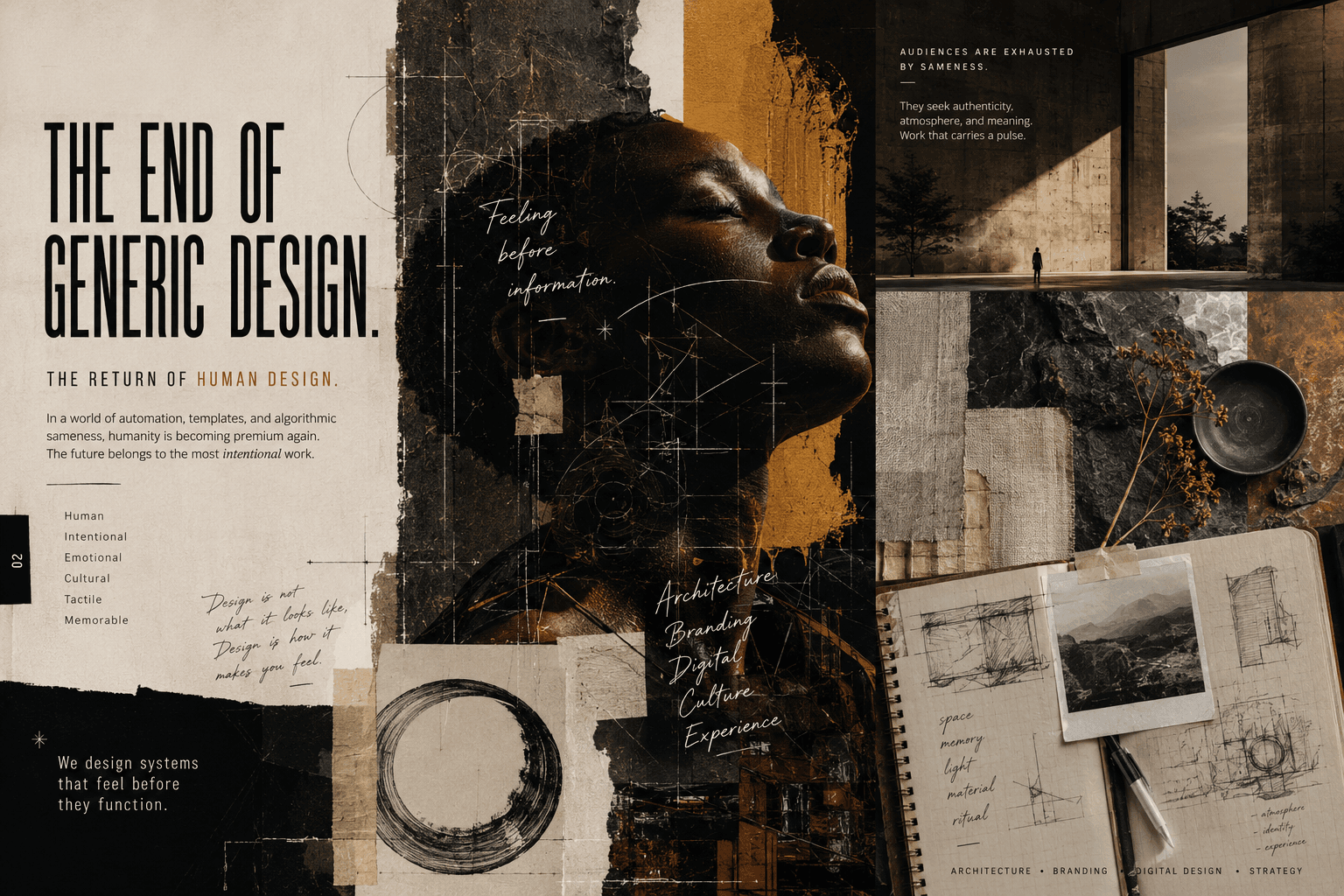
The End of Generic Design
For years, digital culture rewarded perfection:
- ultra-clean interfaces
- sterile branding
- lifeless renders
- minimalist sameness
- algorithm-friendly visuals
- emotionally neutral design systems
But audiences have changed.
People are exhausted by environments, brands, and digital experiences that feel interchangeable. We now live in a world where AI can generate infinite content instantly — which means technical execution alone is no longer enough.
Taste matters more. Perspective matters more. Identity matters more.
The work that resonates today is the work that feels:
- human
- sensory
- emotionally intelligent
- culturally rooted
- intentional
- cinematic
- crafted
This is not a trend confined to graphic design. It is affecting architecture, interiors, branding, web design, spatial storytelling, fashion, product design, creative direction, photography, hospitality, and cultural institutions.
The visual language of the future is becoming more tactile, layered, atmospheric, and emotionally charged.
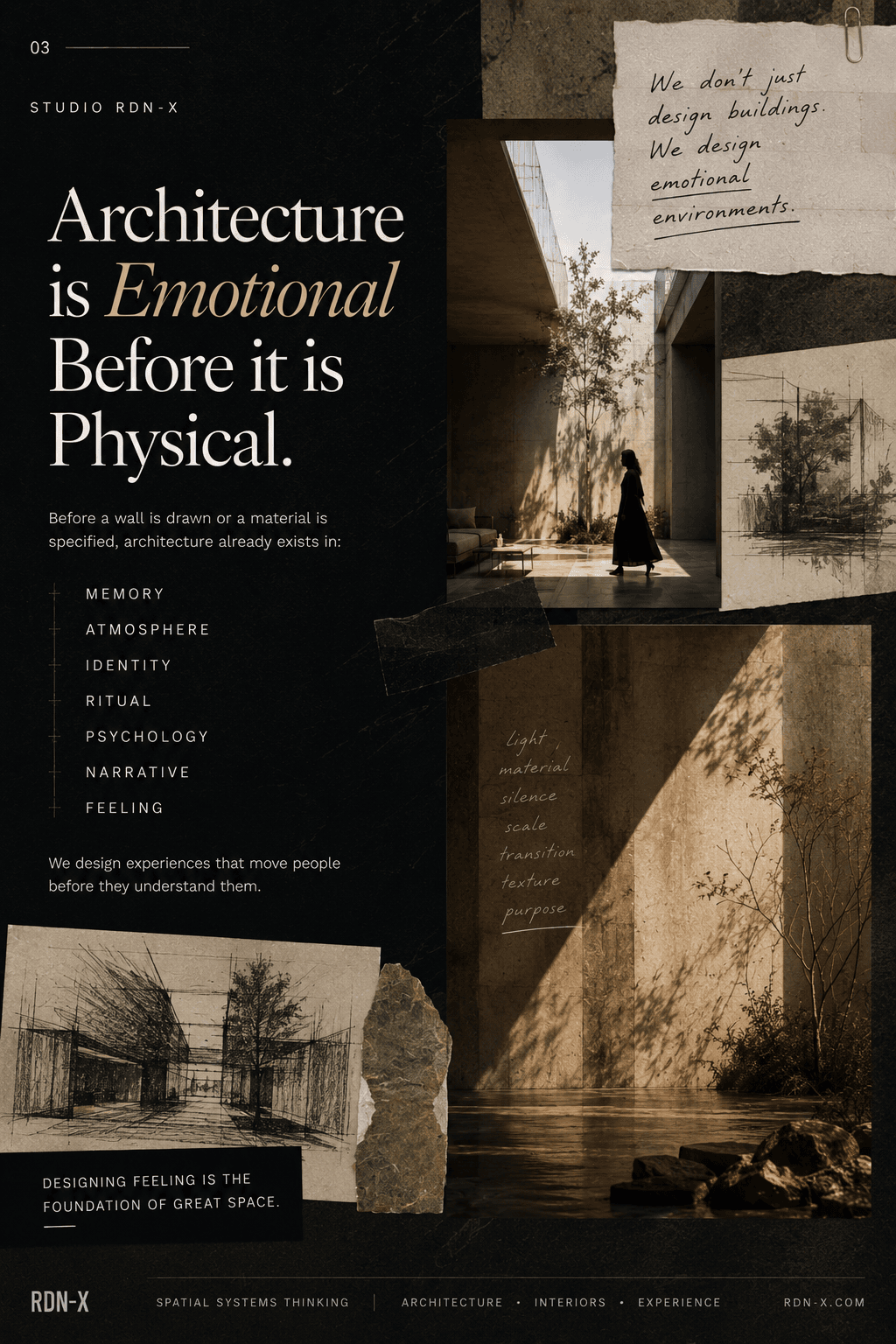
Architecture Is No Longer Just About Buildings
At Studio RDN-X, we've always believed architecture begins long before construction.
Before a wall is drawn or a material is specified, architecture already exists emotionally — in memory, in atmosphere, in identity, in ritual, in psychology, in narrative, in the feeling a space leaves behind.
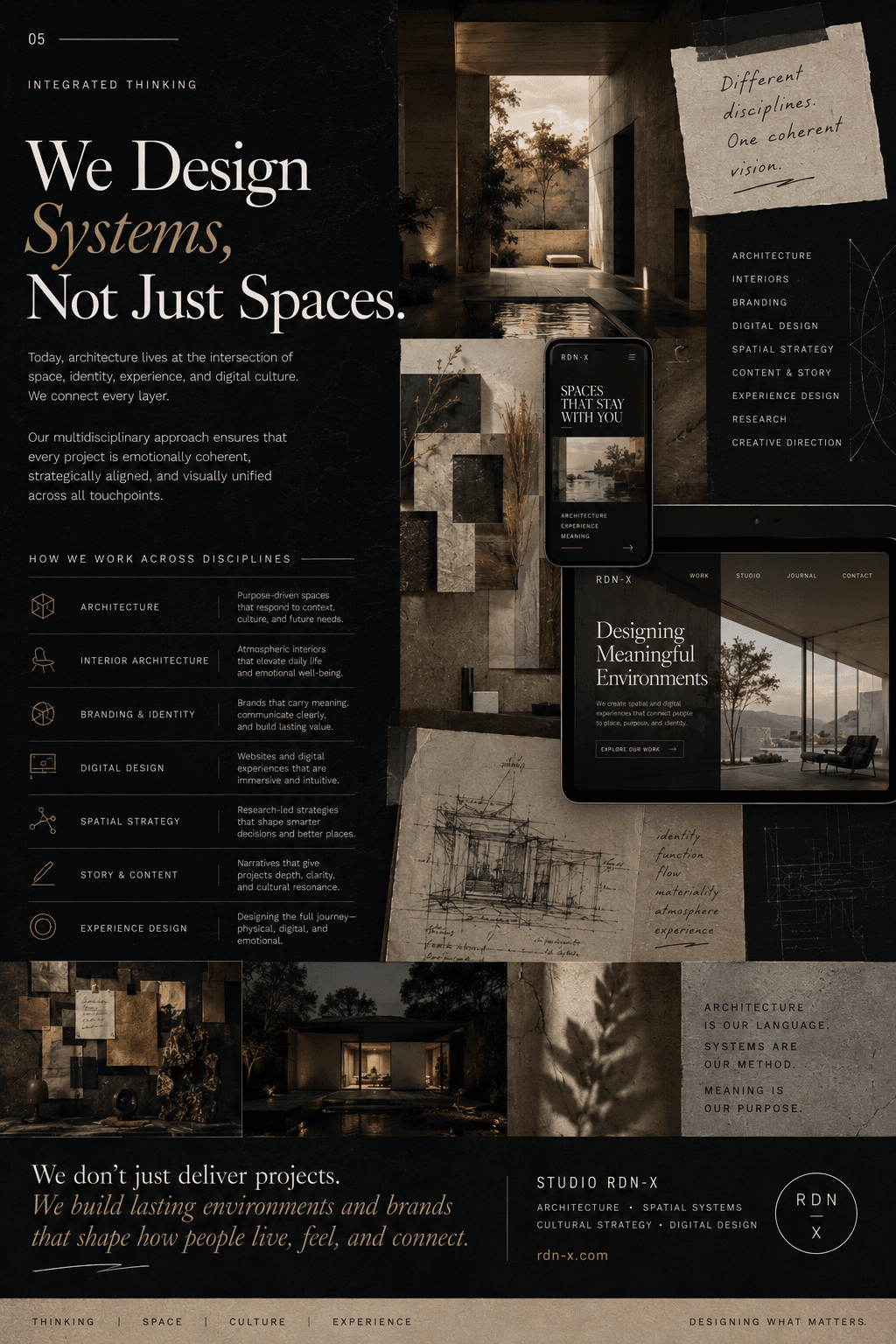
This is why our work has increasingly evolved beyond conventional architectural delivery into what we describe as Spatial Systems Thinking: a process that connects architecture, interiors, digital experience, branding, storytelling, culture, research, atmosphere, behavioural experience, and emotional strategy.
Because in reality, clients are not simply asking for buildings anymore. They are asking:
- How should this place feel?
- What identity does this space communicate?
- How does this environment shape behaviour?
- What emotional experience are we creating?
- What story does this brand or building tell?
- How do architecture and digital presence align?
- How does a project become culturally memorable?
These are no longer separate disciplines. The future belongs to studios capable of thinking across systems.
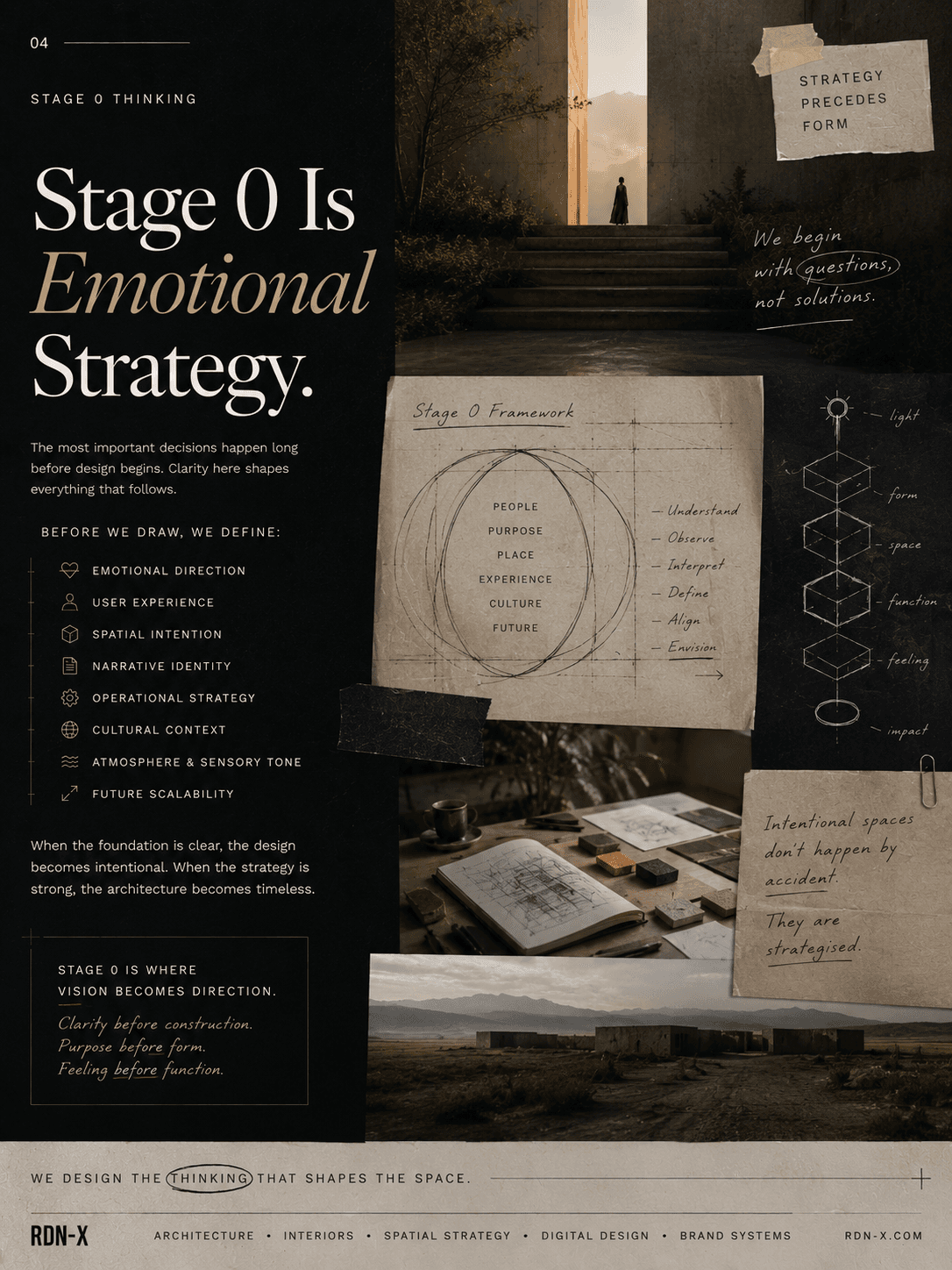
Why Stage 0 Matters More Than Ever
One of the biggest misconceptions in architecture is that design begins with drawings.
It doesn't.
The most important decisions happen before design even starts:
- strategy
- emotional direction
- user experience
- narrative identity
- spatial intention
- operational thinking
- brand alignment
- atmosphere
- future scalability
- cultural positioning
This is why Stage 0 work has become central to our studio philosophy. Because most project failure does not happen during construction. It happens during unclear thinking.
When there is no emotional clarity, no strategic framework, and no coherent vision, projects become reactive instead of intentional.
Today's most successful spaces are not simply beautiful. They are aligned: emotionally, strategically, culturally, experientially, digitally, spatially.
The Rise of Sensory Design
One of the most important shifts happening globally is the rise of sensory storytelling.
People no longer engage with design purely visually. They engage emotionally and physically.
The future of design is becoming more atmospheric, more immersive, more cinematic, more tactile, and more psychologically aware. This applies equally to architecture, hospitality, retail, wellness spaces, digital experiences, websites, branding systems, content design, presentations, and installations.
The best spaces and brands today communicate feeling before explanation.
You feel them before you understand them. That emotional response is not accidental. It is designed.
Why We Work Across Architecture, Branding & Digital Systems
At Studio RDN-X, we intentionally work across multiple creative disciplines because modern projects require interconnected thinking.
A building no longer exists in isolation from its online presence, its narrative, its audience, its visual identity, its cultural positioning, its digital experience, or its emotional tone.
This is why our studio operates across:
- Architecture
- Interior Architecture
- Spatial Strategy
- Stage 0 Design Thinking
- Creative Direction
- Brand Systems
- Digital Design
- Visual Storytelling
- Research & Cultural Strategy
- Experiential Concepts
- Educational & Cultural Infrastructure
Whether we are developing a residential interior, a hospitality concept, a cultural campus, a wellness environment, a digital platform, a spatial research initiative, a masterplan, or a worldbuilding concept — the process remains the same.
Designing systems that feel emotionally coherent.
Human Intelligence Is Becoming The Luxury
As automation increases, human intentionality becomes more valuable. Not because technology is bad. But because audiences increasingly crave authenticity, craft, perspective, emotional depth, imperfection, cultural specificity, atmosphere, and meaning.
The future will not be defined by who can generate the most content. It will be defined by who can create work that people remember.
That is the difference between noise and resonance.
What We're Building
Studio RDN-X is evolving into more than a conventional architecture practice.
We are building a multidisciplinary design ecosystem exploring spatial systems, architecture, emotional storytelling, digital culture, sensory experience, research, worldbuilding, education, and cultural infrastructure.
An ecosystem that understands: design is no longer confined to objects or buildings.
Design now shapes emotion, identity, memory, behaviour, community, digital interaction, and culture itself.
And the studios capable of designing across those layers will shape the next generation of creative practice.